
ELECTROCHEMICAL CHARACTERISATION
CS350M
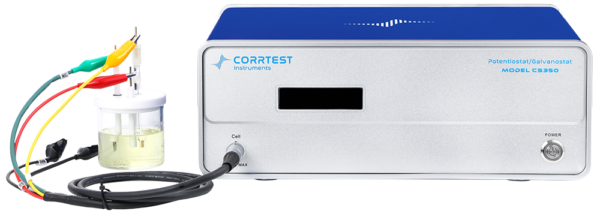
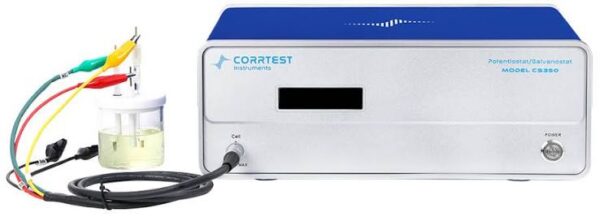
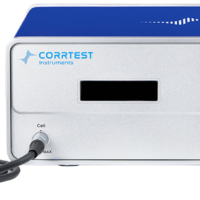
Potentiostat / Galvanostat with EIS
Single channel · ±10 V control · ±2 A control
Product Introduction
- The CS350M is a single-channel potentiostat/galvanostat combining a DDS arbitrary waveform generator and a frequency response analyser (FRA).
- Designed for electrochemical characterisation in corrosion, energy storage, materials research and analytical electrochemistry.
- Supports 2-, 3- and 4-electrode configurations with automatic potential and current ranging.
Applications
- Energy materials: lithium-ion batteries, solar cells, fuel cells and supercapacitors.
- Electrochemical processes: electrosynthesis, electrodeposition, anodic oxidation and electrolysis.
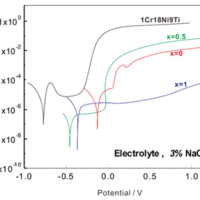
- Corrosion: metallic corrosion, inhibitors, coatings and cathodic protection evaluation.
- Electrocatalysis: HER, OER, ORR, CO₂ reduction and nitrogen reduction.
- Analytical research: stripping voltammetry, trace-element analysis and electrochemical sensor development.
Electrochemical Techniques
Polarisation & Chrono Methods
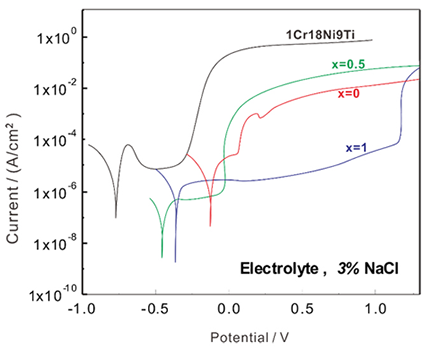
- OCP, potentiostatic I–t, galvanostatic, potentiodynamic/Tafel and galvanodynamic methods.
- Multiple potential/current steps and potential/current stair-step methods.
- Chronopotentiometry (CP), chronoamperometry (CA) and chronocoulometry (CC).
Voltammetry
- LSV, CV, staircase, square-wave, differential-pulse, normal-pulse and differential normal-pulse voltammetry.
- AC voltammetry, second-harmonic AC voltammetry and Fourier-transform AC voltammetry.
- Corresponding stripping methods are listed for SCV, SWV, DPV, NPV and DNPV.
Impedance & Corrosion
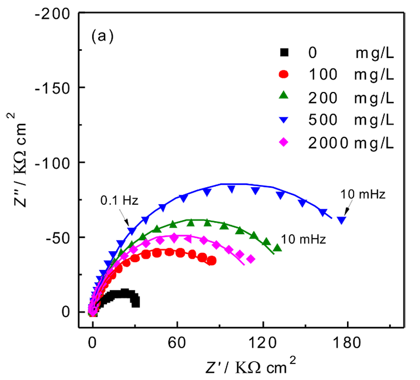
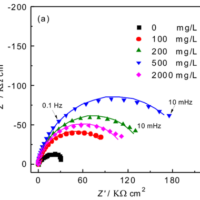
- Potentiostatic and galvanostatic EIS, including selected-frequency and single-frequency versus-time measurements.
- Nyquist, Bode and Mott–Schottky analysis.
- CPP, LPR, EPR, electrochemical noise and zero-resistance ammetry (ZRA).
Battery & Additional Methods
- Battery charge/discharge, GCD, potentiostatic charging/discharging, PITT and GITT.
- DPA, DDPA, TPA and integrated pulse amperometric detection (IPAD).
- Stripping/deposition, bulk electrolysis with coulometry and Rs measurement.
Technical Specifications
| Parameter | Specification |
|---|---|
| Configuration | Single channel; 2-, 3- or 4-electrode systems |
| Potential control | ±10 V |
| Current control | ±2 A |
| Maximum output current | 2 A standard |
| Compliance voltage | ±21 V standard |
| Potential control accuracy | 0.1% × full range ±1 mV |
| Current control accuracy | 0.1% × full range |
| Potential resolution | 10 μV (>100 Hz); 3 μV (<10 Hz), as specified in the model table |
| Current sensitivity | 1 pA |
| Current ranges | 2 nA–2 A; 10 ranges |
| Reference input impedance | 1012 Ω ∥ 20 pF |
| Rise time | <1 μs (<10 mA); <10 μs (<2 A) |
| CV / LSV scan rate | 0.001 mV/s–10,000 V/s* |
| CA / CC pulse width | 0.0001–65,000 s |
| DPV / NPV pulse width | 0.0001–1,000 s |
| SWV frequency | 0.001–100 kHz |
| Current increment during scan | 1 mA @ 1 A/ms |
| Potential increment during scan | 0.076 mV @ 1 V/ms |
| Minimum CV potential increment | 0.075 mV |
| AD acquisition | 16-bit @ 1 MHz; 20-bit @ 1 kHz |
| DA resolution / setup | 16-bit; 1 μs |
| Low-pass filters | Eight-decade coverage |
| Host system | Windows 10 / 11 |
| Interface | USB 2.0 |
| Weight | 6.5 kg |
| Dimensions | 36.5 × 30.5 × 16 cm; dimension order not identified |
- *The source prints the lower scan-rate endpoint as “0.001 mV” without “/s”. The rate notation above should be confirmed with the supplier.
EIS Specifications
| Parameter | Specification |
|---|---|
| Frequency | 10 μHz–1 MHz |
| AC amplitude | 1–2,500 mV |
| DC bias | −10 to +10 V |
| Generator output impedance | 50 Ω |
| Waveforms | Sine, triangular and square |
| Distortion | <1% |
| Sweep modes | Logarithmic or linear; increasing or decreasing |
| Minimum integration | 10 ms or one cycle, whichever is longer |
| Maximum integration | 106 cycles or 105 s, as stated |
| Measurement delay | 0–105 s |
| Automatic potential compensation | −10 to +10 V |
| Current compensation | −1 to +1 A |
| Bandwidth setting | Eight decades; automatic or manual |
Software & Analysis
- CS Studio 6.0: user-defined test sequences and real-time data saving.
- Data analysis: CV peak/integration analysis, Tafel fitting, equivalent-circuit EIS fitting, electrochemical noise and Mott–Schottky analysis.
- Battery analysis: capacity, specific capacitance, efficiency and charge/discharge energy.
- SDK: integration examples and interfaces for Python, LabVIEW, C, C++, C# and related languages; confirm the supplied SDK package.
- Export: data formats compatible with OriginPro and Microsoft Excel.
Optional Expansion
- Current boosters: CS2020B / CS2040B / CS2100B are described for expansion to ±20 A / ±40 A / ±100 A. These are external options, not the standard CS350M current rating.
- Custom compliance: ±30 V is described as a custom single-channel option; confirm availability for the ordered configuration.
- Multiplexer: 16–32-channel expansion is described for sequential high-throughput work; it is not equivalent to independent simultaneous potentiostat channels.
- CST520 electrode mapper: compatibility is described for the CS family; confirm configuration and accessories for CS350M.
Configuration & Enquiry
- Specify the cell configuration, required potential/current range and impedance bandwidth when requesting a quotation.
- Confirm the current document revision, selected accessories and calibration information.
- The model-specific specification table is used here. Broader CS-family passages contain different sensitivity, resolution and impedance claims; these have not been substituted into the CS350M table.
Prepared from the supplied seven-page CS350M document. Specifications and optional configurations require confirmation for the supplied instrument.
Reviews
There are no reviews yet.